
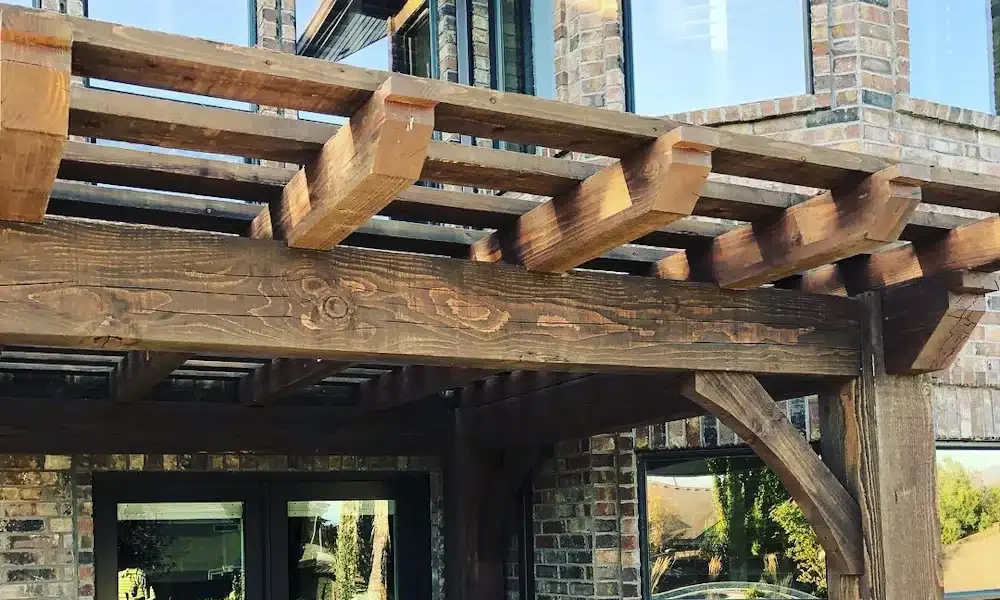

Species is only one decision
Grade, moisture, dimensions, preparation, joinery, fasteners, finish, and detailing all affect the finished structure. Structural design comes before appearance.
Douglas fir
Douglas fir is strong and well suited to substantial timber-frame work when the grade and member sizes match the design. It still needs exterior detailing and maintenance.
Redwood and cedar
Redwood and western red cedar offer natural decay resistance and distinctive appearance. Cost, availability, grade, strength, and desired detailing should be considered.
Plan the finish
Exterior timber changes with sun and moisture. Choose a finish system with realistic maintenance expectations for the site and record the exact product used.
Primary references
Sources and further reading
These references support the technical principles in this guide. Project-specific plans, product instructions, engineering, and local requirements still control the work.
- Wood Handbook: Wood as an Engineering MaterialUSDA Forest Products Laboratory. Reference for wood species, moisture behavior, mechanical properties, decay, fasteners, and exterior use.
- Finishing Wood ExteriorsUSDA Forest Products Laboratory. Research-based guidance on preparation, paints, stains, water repellents, weathering, and maintenance.
- Wood Handbook, Chapter 14: Biodeterioration of WoodUSDA Forest Products Laboratory. Reference for decay conditions, natural resistance, preservative treatment, and moisture control.