
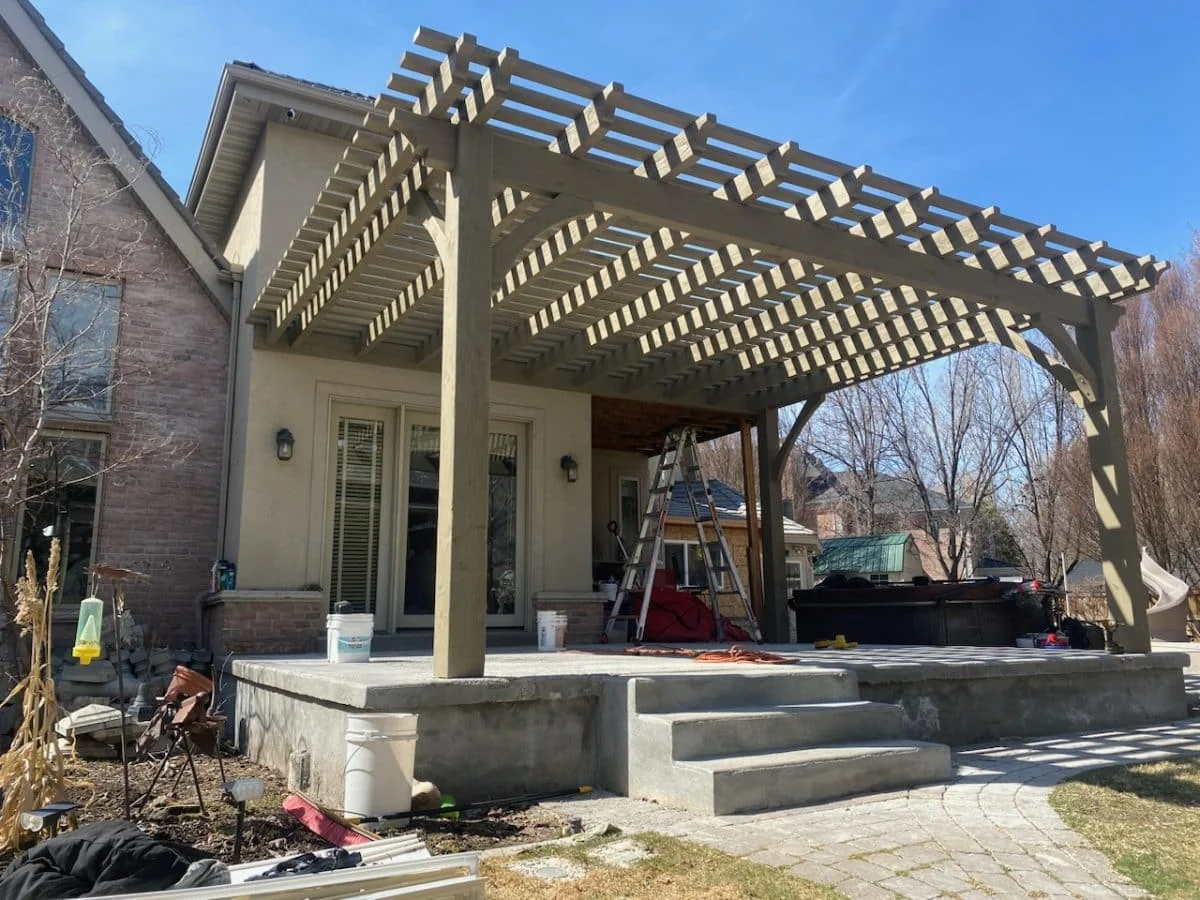

The short version
Key takeaways
- Do not decorate around structural uncertainty.
- Keep sound structural members; replace decayed or undersized parts rather than burying them.
- A new roof, swing, privacy wall, or hanging feature can add loads the old frame was not designed to carry.
- Refinishing starts with identifying moisture problems and the existing coating.
First decide whether the frame is worth saving
Step back and look for leaning posts, sagging beams, failed footings, loose connections, corrosion, decay, persistent wet areas, and previous repairs that changed the load path. Probe suspicious wood carefully and compare it with sound dry material. Check the building connection on attached pergolas and the post bases on freestanding structures.
A faded finish, dirty rafters, or outdated trim is a cosmetic problem. Soft wood, movement, undersized additions, or failed foundations is not. When the structure is questionable, have it evaluated before people climb on it or hang new loads from it.
Separate four different projects
Cleaning and refinishing renews a sound structure. Repair replaces localized damaged components or hardware. Remodeling changes function, such as adding shade, privacy, lighting, or a roof. Replacement removes a frame that is unsafe, poorly placed, too small, or not worth reconstructing. Naming the project correctly prevents a cosmetic budget from being used on structural work.
Document what remains, what changes, who is responsible for engineering or permits, and how new work connects to the old. Hidden assumptions are where small pergola makeovers become expensive.
Useful upgrades that do not pretend every pergola is the same
A sound open pergola can become more comfortable through deliberate rafter spacing, removable shade fabric designed for the frame, climbing plants with a realistic maintenance plan, lighting installed by the appropriate trade, privacy screens that do not create a wind sail, or new furniture zones that improve circulation. Stain color, trim simplification, concealed wiring routes, and cleaner hardware can modernize the appearance without faking a brand-new structure.
A swing, hammock, heater, fan, solid roof, heavy planter, or privacy wall changes loads or clearances. Do not fasten these wherever they look convenient. Confirm the support and attachment first.
Refinish without sealing in the problem
Correct irrigation overspray, roof or gutter leaks, poor drainage, soil contact, and debris traps before refinishing. Identify the old coating, clean with a method appropriate to the surface, let the wood dry to the finish manufacturer’s requirements, and test the new system on a small area. Aggressive pressure washing can damage the surface and make an otherwise sound frame look worse.
Expect sun-exposed faces and end grain to weather differently. A transparent or semi-transparent finish will not make mismatched replacement wood disappear. Samples and an honest expectation about color variation are more useful than a tiny printed swatch.
Know when replacement is the better answer
Replacement usually makes more sense when multiple primary members are decayed, footings or post placement are fundamentally wrong, the frame cannot support the desired roof, the useful area is badly sized, an attached connection is unsafe, or the cost of piecemeal reconstruction approaches a properly designed new structure. Salvaging a few sound decorative pieces may still be possible, but nostalgia should not be asked to carry a roof.
Use this on site
Project checklist
- Photograph the structure from every side and at each connection.
- Check posts, footings, beams, rafters, fasteners, and any building attachment.
- Identify active water sources before cleaning or coating.
- List every proposed load-adding upgrade.
- Separate cosmetic work from structural repair in the quote.
- Confirm whether local permit or HOA review applies to the remodeled scope.
Common questions
Questions homeowners ask
Can I add a solid roof to my old pergola?
Only after the frame, foundations, connections, slope, drainage, wind, and snow loads are evaluated for the new roof. An open pergola was not necessarily designed to act as a covered structure.
Can I hang a porch swing from a pergola beam?
Do not assume so. The beam, connection, support, dynamic load, clearances, and attachment hardware need to be checked for that use.
Should I stain over the existing finish?
Not until you identify and prepare the existing coating. Incompatible products and wet or dirty surfaces are common causes of peeling and uneven results.
Primary references
Sources and further reading
These references support the technical principles in this guide. Project-specific plans, product instructions, engineering, and local requirements still control the work.
- Wood Handbook: Wood as an Engineering MaterialUSDA Forest Products Laboratory. Reference for wood species, moisture behavior, mechanical properties, decay, fasteners, and exterior use.
- Finishing Wood ExteriorsUSDA Forest Products Laboratory. Research-based guidance on preparation, paints, stains, water repellents, weathering, and maintenance.
- Wood Handbook, Chapter 14: Biodeterioration of WoodUSDA Forest Products Laboratory. Reference for decay conditions, natural resistance, preservative treatment, and moisture control.
- Utah Code Title 15A: State Construction and Fire Codes ActUtah State Legislature. The state code framework. Local jurisdictions administer permits, zoning, plan review, and inspections.